Picturing Your Perfect Fence in Bayport?
Talk to us about what you’re thinking
Free estimates • Licensed and insured • Locally owned
Serving Bayport and Hernando County
Fence Installation in Bayport, FL
Bayport is one of those places in Hernando County that doesn’t look or feel like anywhere else out here. It’s tucked at the end of Cortez Boulevard where the road narrows down to two lanes, marsh on both sides, and the Gulf sitting right there at the end of it. If you live out here, you already know the tradeoff: it’s beautiful and quiet, and it’s also one of the harder environments on fencing material in this entire county.
Salt air off the Gulf eats through the wrong materials faster than most people expect. A fence that would last fifteen years in a drier inland neighborhood can start showing serious corrosion or wood rot in half that time if it’s not the right material for a coastal environment. Add in the storm surge exposure that comes with being this close to the water, and the elevated or stilt-style properties that are common along Bayport’s side streets, and you’ve got a fencing situation that needs a little more thought than a standard suburban install.
If you’re not sure what actually holds up out here, our Spring Hill fence installers can walk you through how local conditions affect material choices, and it’s a good starting point before you commit to anything.
What Actually Holds Up in a Coastal Environment Like Bayport?
This is where material choice matters more than almost anywhere else in Hernando County. Wood is a tough sell in Bayport unless you’re committed to a serious maintenance schedule, and even then the combination of salt air and humidity is going to work against you consistently. Untreated or improperly sealed wood in this environment can start splitting and rotting at the post base within a few years, and once that happens you’re pulling posts and starting over rather than patching.
Aluminum fencing is genuinely one of the best fits for Bayport properties. It doesn’t rust, doesn’t corrode in salt air, and doesn’t need painting or sealing to hold its appearance. For homes near Bayport Park or along the side streets closer to the water, aluminum gives you a clean, low-maintenance boundary that handles the coastal environment without fighting it. It also works well on elevated or stilt-style foundations where a heavier material would be harder to work with structurally.
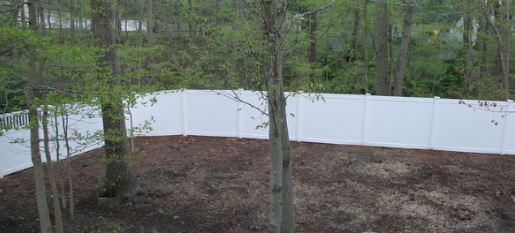
Vinyl fencing is another strong option out here for the same reasons: no rust, no rot, no repainting, and it holds up well against the moisture and salt that come with being this close to the Gulf. Privacy vinyl is popular for properties that want to block wind off the water as much as anything else, and it does that job well when it’s installed with proper post depth to handle the softer, sandier soil that’s common near the shoreline.
Chain link fencing can work in Bayport but needs to be galvanized or vinyl-coated rather than bare metal if you want it to last in a salt air environment. Bare chain link out here is going to start rusting faster than you’d expect, and once that starts it doesn’t stop. The right coating makes a real difference in how long it holds up.
Wood fencing isn’t completely off the table in Bayport, but it needs to be pressure-treated, properly sealed, and maintained on a consistent schedule if you want it to last. For properties further back from the water where the salt air exposure is less direct, it’s more realistic. For anything right on the water or close to the marsh edge, we’d steer you toward aluminum or vinyl before we’d recommend wood.
For larger Bayport properties with acreage that needs a working boundary, farm and agricultural fencing options like woven wire or split rail can work well depending on the terrain, though the same coastal material considerations apply when you’re choosing between treated and untreated options.
We also install commercial fencing for businesses and properties around Bayport that need secured entry points, perimeter fencing, or gated access. If your situation doesn’t fit neatly into one of the categories above, give us a call and we’ll figure out what makes sense for your property.
Frequently Asked Questions
Does salt air really make that big a difference for fencing material in Bayport?
It genuinely does, especially this close to the Gulf. Materials that perform well in inland Hernando County neighborhoods can fail significantly faster in a coastal environment. Aluminum and vinyl are the most forgiving choices out here because neither one reacts to salt air the way wood or bare metal does. The closer you are to the water, the more that material choice matters.
My home is elevated or on stilts. Does that change how a fence gets installed?
It can, depending on where the fence needs to tie in and what the grade looks like at ground level. We look at each property specifically before talking about installation approach since there’s no single answer that fits every elevated lot in Bayport.
My fence took storm damage and some posts shifted. Is it worth repairing or should I replace it?
It depends on how badly the posts moved and whether the base of the material corroded or rotted from water exposure. If the posts are still solid and it’s just panels or sections that failed, repair can make sense. If the posts shifted significantly or the material has failed at the ground line, replacement is usually the better call. Patching around compromised posts is a short-term fix on a problem that tends to get worse after the next storm.
What fence material holds up best on a lot this close to the water?
Aluminum and vinyl are the strongest choices for Bayport properties given the salt air and moisture exposure. Wood can work on lots set further back from the water where direct salt air exposure is less constant, but needs pressure treatment, proper sealing, and consistent maintenance to hold up out here. Bare metal chain link rusts faster than people expect in this environment and should always be vinyl-coated or galvanized if you’re going that direction.
No fence is going to survive a direct surge event, but does proper installation help?
Yes, meaningfully. Proper post depth, the right concrete footing, and choosing materials that flex rather than snap under wind pressure all reduce the likelihood of catastrophic failure. A fence that’s installed correctly has a much better chance of limited, repairable damage after a storm versus one that was rushed or under-engineered from the start.
How long does a typical fence installation take in Bayport?
Most residential jobs here wrap up in one to three days depending on size and material. Softer coastal soil can add some time to post-setting since we want to make sure depth and concrete footing are right before moving on. Elevated or stilt-style properties sometimes take a little longer depending on the layout.
Areas We Serve
Contact Fence Installation of Spring Hill Today!
If you’re in Bayport and want an honest conversation about what fence material actually makes sense for your property and how close you are to the water, give us a call. We’ll take a look and give you a straight answer, no pressure, no runaround.